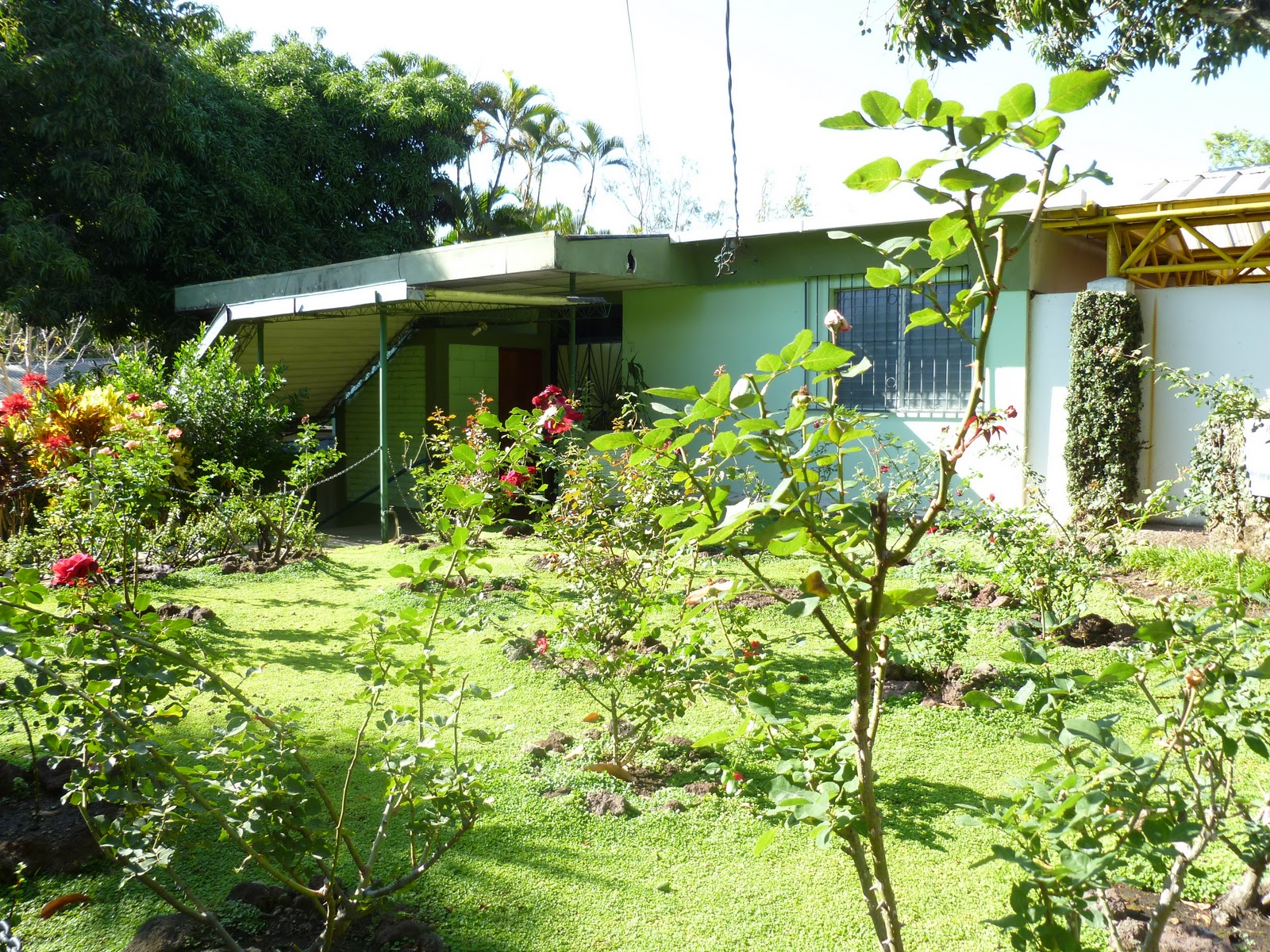
Our second weekend we all traveled together to a community about 18km from the pacific coast in the Bajo Lempa region of the country called Nueva Esperanza. This community was formed by a group of people forced off their land during the years of the war. They originally lived in the north in a region called Chalatenango but were forced to flee to the capitol after many years of violence and oppression from the army. After living in refuge in the basement of a church in El Salvador (at this time there were about 400 of them, using on sink and no bathroom in the basement) they received some help by British missionaries to escape to Nicaragua. After the war was over and they were able to come back to El Salvador, their land in Chalatenango was gone and they were forced to settle on a flood plane. Each year during the rainy season they face the impending threat of flooding from the Rio Lempa to their north. Also a threat is the release of water from two hydroelectric plants that have damned the river farther upstream from them. A couple of times a year when the water level at the lake near the plants rise they release the dams and completely flood the bajo lempa region. All of the houses and latrines were raised up on a couple of feet of cinder blocks. The community is very tight having gone through all of that history together during the war. Now each year they face a whole new batch of problems from flooding and having to be ready to evacuate during the rainy season. This came in handy on the day of the earthquake in Japan because the whole community was on full alert when the tsunami warning was given out for Latin America.
Even though we traveled there as a group we still split up into groups of two staying with families in the communities. My friend Elspeth and I stayed with man from the original community in Chalatenango and then stayed behind to fight with the guerrilla forces when the rest went to Nicaragua. During the war arms from Mexico. He was very proud of his community and his fellow companeros in the revolution and had many amazing stories to tell.
Currently the community has formed a coop in which the cultivate sugar cane, cashews and coconuts and they also raise cattle for beef and cheese production. On Friday morning we took a tour of the different farms and learned about the processing of each. This also included being able to taste some delicious fresh coconut water and fruit and chew on fresh sugar cane. I also learned fun new facts about cashews. I didn’t know they are actually a seed that comes from the fruit called maranon (in English its called the cashew apple). Only one nut (seed) for each fruit! And I also found out that I love maranons, a very unique taste and really good. They do not harvest the fruit because they haven’t been able to make a profit off them for the amount of work that goes into keeping them fresh. It is a very delicate and temperamental fruit. In the afternoon we visited an organization started by a group of women in the community called the Emergency Health Fund. This is an organization the runs a local clinic and collects money that the whole community to fund medicine and doctor’s consultations for those in the community that cannot afford these things. In the evening a local youth band put on a private concert for us. They played traditional Latin American music with a collection of wooden flutes and drums along with a Ucayali and normal guitar, base and drum set.
Saturday we spent with the director of the community center for Nueva Esperanza and other surrounding communities in bajo lempa. We went down to the actual river where they are working to repair some of the levies and remove some of the sand from the river bed to prepare for the rainy season which starts in the middle of May. Although these people still struggle very much with poverty, mother nature, and oppression from the government (although that is changing now with the first election of the first leftest political party last year) they have been able to accomplish many things other communities such as them have not. The directive board is run mainly by women and we the majority of the community members we spoke to attribute much of their success to the fact that they are lead by women. With aid they have received from church groups in countries like Canada, Belgium and Germany they build a beautiful pastoral center to host communities gathering and delegations such as our, and they have also built a school and put a lot of effort and focus into education. That afternoon we went to a worship service on the anniversary of Rutilio Grande who was the first martyr in the armed conflict. That evening there was a huge quiecinera for a local girl in Nueva Esperanza and people of all ages and from all over bajo lempa came to celebrate. They family hired a d.j and upwards of about 100 people partied until the wee hours of the morning.